English
 日本語
日本語 한국어
한국어 français
 tiếng việt
 Indonesia
 Español
 العربية
 русский
Nov 20, 2024
Blog

In a recycling plant, metal recovery often depends on what happens before the material reaches a sorting machine. A steel object buried in mixed waste can be difficult to separate, while the same object becomes easier to recover after the material has been opened, reduced, and spread into a more consistent flow. The effectiveness of separation is therefore closely connected to how the waste is prepared and presented.
A magnetic separator takes advantage of this difference by attracting ferrous metals and diverting them from non-magnetic materials. This can help recover iron and steel as a separate fraction, improve the purity of recyclable materials, and reduce unwanted metal entering downstream equipment.
Ferrous recovery, however, is only one stage of a modern recycling process. Bulky waste may first pass through a two-shaft shredder to make the material easier to handle and sort. Once ferrous metals have been removed, an eddy current separator can be used to target suitable non-ferrous metals. The overall result depends on how well these stages work together and whether each machine receives material in a condition suited to its function.
Understanding the magnetic separator working principle is therefore a practical starting point for designing the separation stage. Magnetic field characteristics, conveyor speed, material depth, particle size, and equipment position all influence how effectively metal can be recovered from a waste stream.
The basic magnetic separator working principle is based on the interaction between a magnetic field and ferrous material. When a mixed waste stream enters the effective range of the magnetic field, iron-containing particles experience magnetic attraction. If that attraction is sufficient to overcome the forces keeping a particle in the original material flow, the particle can be lifted, held, or redirected.
Materials such as cardboard, wood, glass, and most plastics do not respond to the magnetic field in the same way. They continue along the normal conveying path while the ferrous fraction is separated.
The practical result depends heavily on how close the target material is to the magnetic field. A large steel object lying directly in the separation zone is relatively easy to expose. A small ferrous fragment buried underneath a thick layer of plastic, paper, or fines presents a different challenge.
For this reason, magnetic separation is not determined by magnet strength alone. The magnetic field needs to interact with the target material under suitable operating conditions. The distance between the magnetic assembly and the material, the conveyor arrangement, and the way waste is distributed across the belt all influence the outcome.
The purpose of separation also affects the design. Some plants use a magnetic separator primarily to protect downstream equipment from unwanted ferrous objects. Others want to recover ferrous material as a separate recyclable fraction. A system designed mainly for material purification may have different priorities again.
Defining the separation objective first makes it easier to determine where the separator belongs and what operating conditions it needs to handle.
Once the working principle is understood, the next question is why different recycling applications can achieve different separation results. In many cases, the answer lies in the material and operating conditions rather than in the basic separation technology.
The depth of material on the conveyor is one important consideration. When waste is piled too deeply, smaller ferrous pieces can become hidden beneath other materials. A controlled and reasonably even material layer gives the separator a better opportunity to reach individual particles.
Particle size also changes the way material behaves. Large pieces can conceal metal components, while very small particles may become mixed with fines and other materials. This is one reason material preparation should be considered before the magnetic separator is selected.
Conveyor speed affects the time available for material to pass through the effective separation zone. Increasing belt speed may increase material movement, but it can also reduce the available separation opportunity. The appropriate operating speed depends on the equipment configuration and the material being processed rather than on a single universal value.
Feed distribution is equally important. A conveyor carrying an uneven pile does not provide the same separation conditions across its entire width. If most of the waste is concentrated in one area, some particles may be farther from the magnetic field than expected. Consistent feeding can therefore contribute to more stable separation.
Moisture and contamination can create another problem. Wet or sticky material may cause different components to remain attached to one another. A small steel fragment can remain physically trapped inside another piece of waste even though the metal itself responds strongly to the magnetic field.
The distance between the magnetic source and the target material also matters. As the working distance increases, the magnetic influence available at the material decreases. Installation geometry therefore needs to be evaluated together with the magnetic characteristics of the equipment.
For a new recycling project, these factors are best assessed using representative feed material. A separator tested with a clean, evenly distributed sample may not produce the same result when processing irregular mixed waste with different particle sizes and contamination levels.
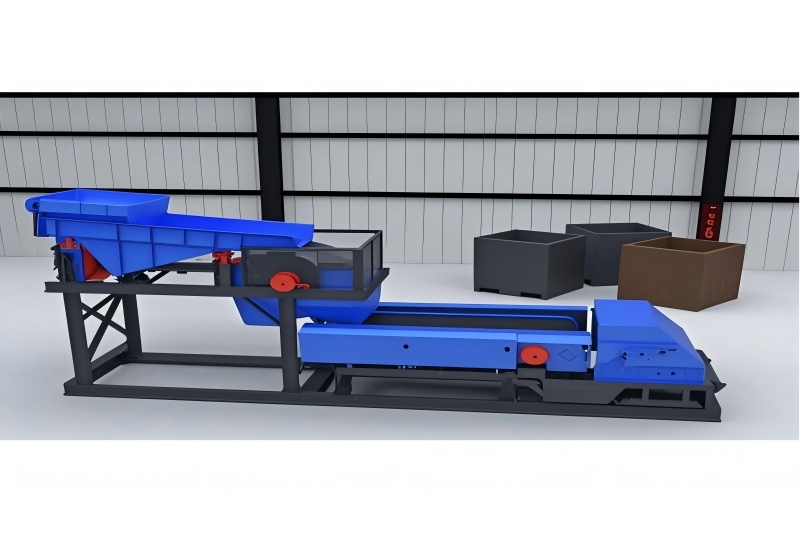
Magnetic separation becomes more predictable when incoming waste has already been prepared. Bulky waste, tangled materials, and large irregular objects can hide metal and make the feed difficult to distribute evenly across a conveyor.
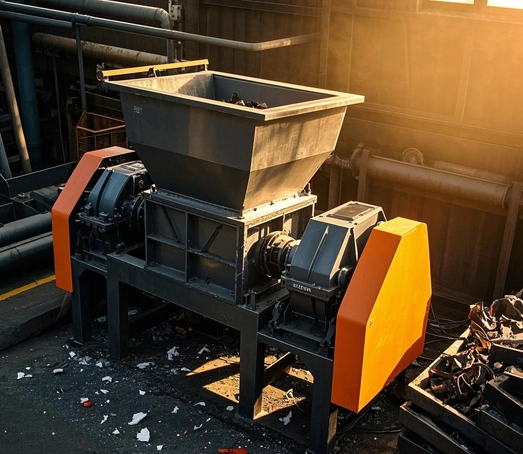
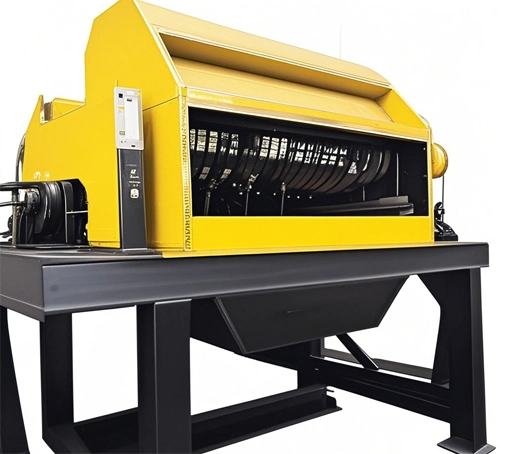
A two-shaft shredder can address this problem by using two intermeshing shafts to grip and tear incoming material. Instead of relying primarily on high-speed impact, the shafts pull bulky material into the cutting chamber and progressively reduce it.
The purpose of a two-shaft shredder upstream of separation is not simply to produce the smallest possible particles. The objective is to create a more manageable material stream that can move through subsequent screening and separation stages with greater consistency.
For example, a large mixed waste object may contain steel components that are difficult to access before shredding. After the material has been opened and reduced, those components may become exposed and easier for a magnetic separator to remove.
Shredding does not automatically improve every separation result, however. If the material becomes excessively fine or generates a large quantity of fines, downstream sorting can become more complicated. The output characteristics of the two-shaft shredder should therefore be considered when specifying the magnetic separation stage.
For recycling projects that require several processing stages, Yuebang's solid waste processing equipment can be reviewed as part of the wider equipment selection process. Looking at the complete material flow is generally more useful than choosing a shredder and separator independently.
Ferrous metal is only one category of metal found in many recycling streams. Once steel and iron-containing material have been removed, aluminum, copper, brass, and other conductive non-ferrous metals may still be present.
This is where an eddy current separator performs a different job. Instead of relying on attraction to remove ferrous material, an eddy current system uses a changing magnetic field to induce electrical currents in conductive non-ferrous particles. The interaction between those currents and the magnetic field produces a force that can separate suitable non-ferrous particles from the main material flow.
The distinction between the two technologies is important. A magnetic separator is primarily used to recover or remove ferrous material. An eddy current separator is intended for suitable non-ferrous metal recovery. One does not replace the other when a recycling plant wants to recover both fractions.
A typical material flow might begin with size reduction, followed by screening where necessary. The prepared stream can then pass through magnetic separation to remove ferrous material. After that stage, the remaining material can move to an eddy current separator when non-ferrous metal recovery is required.
This sequence is not mandatory for every application. A cleaner material stream may require fewer processing stages, while complex municipal or commercial waste may need additional sorting technologies. The correct arrangement depends on the material entering the plant and the quality of the final recovered fractions.
The separation stages should therefore be considered together. If ferrous material remains in excessive quantities before the non-ferrous recovery stage, it can affect the conditions under which downstream sorting equipment operates. A well-planned process removes each target fraction at a stage where the material is most suitable for separation.
Choosing a magnetic separator should begin with the material rather than with a preferred machine model. A supplier needs to understand what the separator will actually process before recommending an appropriate configuration.
The material description should include its main components, expected ferrous content, particle-size range, moisture, contamination, and general flow characteristics. If the material has already passed through a two-shaft shredder, the specification should describe the actual shredded output rather than the original waste.
Feed conditions are equally important. Conveyor width, belt speed, material depth, expected throughput, and available installation space all influence the selection and positioning of the separator. The equipment should also be compatible with the surrounding conveyor and sorting system rather than treated as an isolated machine.
The intended purpose should be made clear at the beginning of the project. A separator installed mainly for equipment protection may be positioned to capture large ferrous objects before they reach sensitive machinery. A system focused on metal recovery may be placed farther downstream, after shredding or screening, where smaller ferrous particles have become more accessible.
There is therefore no universal answer to whether a magnetic separator should be installed before or after a shredder. The correct position depends on what happens to the material at each stage and what the plant is trying to achieve.
| Consideration | Why It Matters | What the Buyer Should Provide |
|---|---|---|
| Material composition | Determines what needs to be separated | Main materials and expected ferrous content |
| Particle size | Affects exposure and material flow | Typical and maximum particle dimensions |
| Feed rate | Influences equipment loading | Expected operating throughput and peak conditions |
| Material depth | Affects access to the magnetic field | Typical layer thickness on the conveyor |
| Conveyor conditions | Influences separation opportunity | Belt width, speed, and installation layout |
| Separation objective | Defines the required process result | Equipment protection, recovery, or material purification |
Downstream requirements should also be included. If an eddy current separator will follow the magnetic stage, the two systems should be considered as part of the same material flow. Removing ferrous metal first can help create a more appropriate feed for subsequent non-ferrous separation.
For a project that involves mixed waste, multiple separation stages, or unusual feed characteristics, it is useful to discuss the application directly with the equipment supplier. Buyers can contact Yuebang for application-specific equipment guidance and provide information about the material, existing equipment, expected operating conditions, and desired recovery results.
A reliable recycling line is built around the way material changes from one stage to the next. Instead of asking which individual machine is the most powerful, it is more useful to ask whether each stage prepares the material properly for the following stage.
For bulky mixed waste, a two-shaft shredder may be used first to reduce large objects and open up the material. Screening can then separate different size fractions if required. A magnetic separator can remove ferrous metal from the prepared stream, while an eddy current separator can subsequently target suitable non-ferrous metals.
The actual configuration may be shorter or more complex depending on the feedstock. What remains consistent is the need for each machine to have a defined role. Shredding changes the physical condition of the waste. Screening organizes the material by size or other characteristics. Magnetic separation addresses ferrous metal. Eddy current separation addresses suitable non-ferrous metal.
This process-based approach also makes troubleshooting easier. If ferrous recovery is lower than expected, the investigation can consider material depth, feed distribution, conveyor speed, particle exposure, and magnetic working distance rather than assuming that the magnetic equipment itself is the only variable.
Likewise, if non-ferrous recovery is inconsistent, the quality of the feed entering the eddy current separator should be examined. Excessive fines, remaining ferrous material, uneven feeding, and unsuitable particle characteristics can all influence downstream separation.
Yuebang's role in this process is most useful when equipment selection is considered alongside the actual recycling application. Rather than treating a magnetic separator, two-shaft shredder, or eddy current separator as a standalone purchase, the equipment should be evaluated according to how it will interact with the rest of the line.
This is particularly important for projects where material composition changes over time. A machine that works well with one relatively uniform feed may require different operating conditions when the incoming waste contains more fines, larger objects, moisture, or mixed materials.
The magnetic separator working principle is straightforward: a magnetic field attracts ferrous materials and allows them to be diverted from a mixed material stream. Achieving consistent industrial separation, however, requires more than choosing equipment with a suitable magnetic field.
The condition of the waste matters. Material depth, particle size, conveyor speed, feed distribution, moisture, and working distance all affect how effectively ferrous particles can interact with the magnetic field. Upstream preparation can be equally important, particularly when bulky material needs to be opened or reduced before sorting.
A two-shaft shredder can prepare difficult waste for downstream processing, while an eddy current separator can handle suitable non-ferrous metals after ferrous separation. When these stages are selected according to the actual material flow, the result is a more logical and controllable recycling process.
The best way to specify a magnetic separator is to start with the waste stream, define the recovery objective, and then determine how shredding, separation, conveying, and downstream recovery should work together. This process-based approach can help buyers avoid unnecessary equipment capacity and focus instead on reliable performance under actual operating conditions.
A magnetic separator uses a magnetic field to attract ferrous materials and divert them from a mixed waste or recycling stream. Non-magnetic materials generally continue along the original material path.
Material depth, particle size, conveyor speed, feed distribution, moisture, contamination, and the distance between the magnetic source and the material can all affect separation results.
A two-shaft shredder can tear and reduce bulky waste, helping expose embedded metal and create a more manageable feed for screening and separation.
An eddy current separator is designed to separate suitable conductive non-ferrous metals, such as aluminum, from a moving material stream.
It depends on the application. Installing it before shredding can help protect downstream equipment from large metal objects, while installing it after shredding may improve access to smaller ferrous fragments.
Provide the material composition, particle-size range, expected feed rate, conveyor width and speed, material depth, metal content, moisture and contamination conditions, separation objective, and information about upstream and downstream equipment.