English
 日本語
日本語 한국어
한국어 français
 tiếng việt
 Indonesia
 Español
 العربية
 русский
Feb 05, 2026
Blog

In a mixed-waste recycling plant, the material arriving at the conveyor rarely behaves like a uniform product. A piece of cardboard may sit on top of soil, plastic film can wrap around heavier objects, and small stones or metal fragments may be hidden inside larger pieces. If everything moves into the next processing stage together, downstream equipment has to work with an inconsistent feed from the start.
Screening changes that situation by separating the incoming material into different size fractions before further sorting or recovery takes place. A trommel screen is often considered for this job because its rotating drum can continuously handle irregular and contaminated material. But a trommel is not automatically the right answer. Vibratory screens, disc screens and star screens all have situations in which they may be more suitable.
The choice becomes clearer when the screening stage is viewed as part of the whole recycling process. The material entering the screen, the size fractions required afterward, and the equipment receiving those fractions all affect the decision. For example, a magnetic separator may need a relatively consistent material flow to recover ferrous metals effectively, so the screening stage should be evaluated partly according to what it delivers to that machine.
Rather than comparing screening machines by a single capacity figure or general performance claim, it is more useful to look at how each technology responds to the actual waste stream. Moisture, particle shape, contamination, feed distribution, target size and maintenance conditions can all change the practical result.
The main purpose of screening is to make a mixed material stream easier to process. Once material is divided according to size, different fractions can be sent to different parts of the recycling line instead of forcing one machine to handle everything at once.
Imagine a stream containing soil, broken glass, plastic packaging, wood and pieces of metal. The fines may occupy the spaces around larger objects, while flexible materials can become tangled with bulky items. If the entire stream remains mixed, downstream sorting equipment has to deal with all of these conditions simultaneously.
A screening stage removes some of that complexity. Material smaller than the selected opening falls through, while larger pieces continue forward. These fractions can then be processed separately, depending on the objective of the plant.
This can also affect metal recovery. When a magnetic separator is installed after screening, the material reaching it may have a different particle-size distribution and material depth from the original waste. In some applications, that can make ferrous objects easier to expose and recover.
Screening is not automatically beneficial simply because it creates a size difference, though. An unsuitable opening, excessive moisture or uneven feeding can produce fractions that are difficult for the next machine to handle. The useful question is therefore not just whether the screen separates material, but whether it produces the kind of material that the rest of the line needs.
This is why screening is best treated as a process stage rather than a standalone piece of equipment.
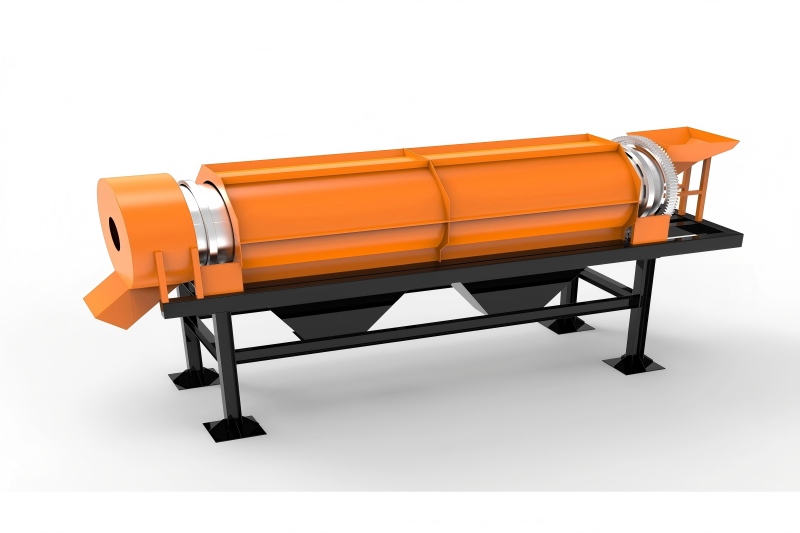
A trommel screen consists of a rotating cylindrical drum with screening openings. Material enters the drum and moves forward as the cylinder rotates. During this movement, the waste is repeatedly lifted and dropped. Smaller particles can pass through the openings, while larger pieces remain inside the drum and travel toward the oversize discharge.
The constant movement is one reason trommels can work well with heterogeneous material. The feed is not simply carried across a fixed screening surface. It is turned over as it moves, giving particles repeated opportunities to reach the openings.
That does not mean every particle will behave according to its measured size. Shape matters. A long, flexible piece may bridge an opening even when part of it is smaller than the nominal aperture. Wet material may also stick together and behave like a larger mass instead of separating into individual particles.
For this reason, drum opening is only one part of trommel selection. Drum diameter and length, rotation characteristics, feed rate and the nature of the waste all affect the final screening result.
Material buildup is another practical issue. Soil, wet organic matter and sticky contaminants can accumulate on the screening surface and gradually reduce effective open area. A trommel intended for such conditions should therefore be considered together with cleaning access and maintenance requirements.
The most useful specification is consequently based on the material that will actually enter the machine. A supplier can make a more meaningful recommendation when the feed composition, moisture, particle-size range and target fractions are known.
A trommel screen is often worth considering when the feed is mixed, bulky or contaminated and the process needs continuous size classification. Municipal solid waste, compost-like material, soil-containing waste and selected construction and demolition streams can all present conditions where a rotating drum is practical.
One reason is its tolerance for irregular feed. Mixed waste does not have to arrive as a neatly distributed layer of uniform particles. The rotating drum can tumble and move the material while it progresses through the screening zone.
Moisture still needs to be taken seriously. A dry stream may move freely through the drum, while wet or sticky material can form clumps and carry fines toward the oversize discharge. If the feed contains a significant amount of material that tends to adhere to the screen, cleaning and inspection become part of the equipment selection rather than an afterthought.
The desired separation also matters. If the plant mainly needs to divide fines from larger material, a trommel may provide a straightforward solution. If several closely controlled size fractions are required, the process may call for additional screening stages or a different screening arrangement.
Another consideration is what happens after screening. Suppose the next stage is ferrous metal recovery. A magnetic separator can remove suitable iron and steel from the screened material, but its performance depends partly on how that material is presented. A screen that produces a relatively stable and manageable fraction may therefore be more valuable to the overall line than one that simply offers a higher nominal screening capacity.
For projects involving several types of waste-processing equipment, Yuebang's recycling and solid waste processing equipment provides a starting point for reviewing how screening can be incorporated with other stages of the line.
Different screening technologies solve the same basic problem in different ways. A trommel rotates the material through a cylindrical drum. A vibratory screen moves material across a screening surface through vibration. Disc and star screens use rotating elements to create separation gaps and move the material forward.
The difference becomes important when the feed is difficult. A relatively dry and free-flowing material may respond well to one type of screen, while wet, sticky or bulky waste may favor another. Particle shape can be just as important as particle size because long or flexible objects can behave unpredictably when they encounter a screening opening.
| Screening Method | How It Moves Material | Important Selection Factors | Where It May Fit |
|---|---|---|---|
| Trommel screen | Rotating drum tumbles and carries material through the screening zone | Moisture, contamination, particle shape, drum configuration and buildup | Mixed, bulky and contaminated waste |
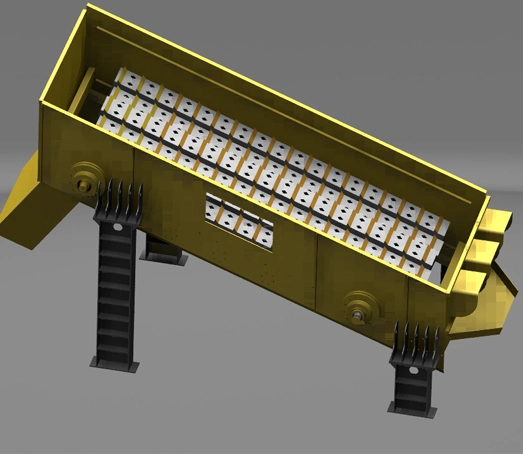
| Vibratory screen | Vibration moves material across a screening deck | Feed consistency, moisture, vibration characteristics and screen media | Controlled size classification for suitable feedstocks |
| Disc screen | Rotating discs create gaps through which smaller material passes | Particle shape, contamination and material flow | Selected bulky and mixed materials |
| Star screen | Rotating star-shaped elements move and classify material | Moisture, particle behavior and desired fraction | Selected waste and biomass applications |
This table is best used as a starting point rather than a ranking. There is no screening technology that is universally better for every mixed-waste application. A machine's practical performance depends on the relationship between the equipment and the feed.
For example, a vibratory screen may be attractive where controlled screening and a compact arrangement are important, but wet or sticky material may create different operating challenges. A disc or star screen may handle certain bulky materials effectively, while a trommel can be a more natural fit when continuous tumbling is useful for the feed.
The required output should guide the comparison. If the screen must create a particular size fraction for a magnetic separator, the quality and consistency of that fraction matter more than simply maximizing the amount of material processed through the screen.
Screening and metal separation are often closely connected because the condition of the material changes as it moves through the plant. A mixed stream entering a screen may contain several different particle sizes, while the material leaving it has already been divided into more defined fractions.
A magnetic separator can then be used to recover ferrous metals from an appropriate fraction. The magnetic field attracts suitable iron and steel components while non-magnetic materials continue along the conveying path.
The position of the magnetic separator is not fixed by one standard layout. In some recycling lines, large ferrous objects are removed early to protect downstream machinery. In others, screening takes place first so that the magnetic separator receives a more manageable fraction.
The better arrangement depends on what the plant is trying to accomplish. If equipment protection is the priority, early metal removal may make sense. If the objective is to recover a cleaner ferrous fraction from a particular size stream, screening may be useful before magnetic separation.
The same principle applies to other separation equipment. Air classifiers, ballistic separators and eddy-current systems each have their own preferred feed conditions. A screen should therefore be evaluated by looking at what the next machine needs, not only at what happens inside the screen itself.
For example, if a magnetic separator is positioned after a trommel, the transfer conveyor should distribute the screened material consistently. A deep pile or uneven feed can reduce the practical benefit of an otherwise suitable separator.
This is why the feeder, screen, conveyor and separator should be considered as one material-handling sequence. A change at one stage can affect the conditions at the next stage.
The first question for any screening project is what the plant will actually process. “Mixed waste” is too broad to determine equipment selection on its own. The feed may contain very different proportions of plastic, paper, soil, organic material, glass, wood and metal depending on its source.
Moisture should be described as accurately as possible because it can change material behavior. Wet material can stick together, while dry material tends to separate more freely. Seasonal changes can also be relevant when the feed composition is not consistent throughout the year.
Particle-size distribution is another basic requirement. The supplier needs to know both the incoming size range and the size fractions the plant wants to produce. This information provides a much stronger basis for selecting screen openings than simply choosing a machine based on overall dimensions.
Throughput should be discussed in the context of the actual material. A nominal capacity number without a clear description of the feed can be misleading. A machine processing relatively clean and free-flowing material may achieve a different result from the same machine handling wet, contaminated and irregular waste.
Maintenance should be evaluated just as carefully. Operators should know how the screening media will be accessed, how buildup can be removed, and how drive components and bearings can be inspected. If screen media needs frequent replacement, the replacement procedure should be practical enough for normal plant maintenance.
The surrounding layout is also important. The feeder must deliver material consistently, the discharge needs to connect with the next conveyor, and any downstream equipment should receive a feed that matches its requirements. If a magnetic separator follows the screen, the conveyor arrangement should allow the ferrous material to enter the magnetic separation area in a reasonably controlled flow.
For a new line or an application with unusual waste characteristics, supplying representative material information can make the equipment discussion much more productive. Photos, descriptions of moisture and contamination, approximate particle sizes and the desired output fractions can all help clarify the actual requirement.
When the equipment layout or process sequence is still being developed, buyers can contact Yuebang to discuss the screening application and provide details about the material, expected operating conditions and downstream recovery requirements.
Choosing a screening machine for mixed waste is ultimately a question of material behavior and process requirements. A trommel screen can be a practical option for many irregular, bulky and contaminated streams because the rotating drum continuously turns and classifies the feed. But vibratory, disc and star screens can be more appropriate when their particular operating characteristics better match the material.
The important comparison is therefore not simply trommel versus vibratory screen. It is how each technology responds to the actual waste, the required size fractions and the conditions created by the rest of the recycling line.
This becomes especially clear when a magnetic separator follows the screening stage. The separator needs suitable material presentation to recover ferrous metals effectively, so the quality of the screened fraction and the conveyor arrangement both matter.
A sound selection process starts with the feed, defines the desired output, considers moisture and contamination, and then works backward from the requirements of the downstream equipment. By approaching screening as part of the complete recycling process rather than as an isolated machine, buyers can make a more defensible equipment choice and build a line that is easier to operate and maintain.
1. What is a trommel screen used for?
A trommel screen separates material according to size using a rotating cylindrical drum. Smaller particles pass through the screening openings while larger material continues toward the oversize discharge.
2. Is a trommel screen suitable for mixed waste?
It can be suitable for many mixed, bulky and contaminated waste streams. Actual suitability depends on moisture, particle size, contamination, material shape and the required screening result.
3. What is the main difference between a trommel and a vibratory screen?
A trommel moves material through a rotating drum, while a vibratory screen uses vibration to move material across a screening surface. The better choice depends on the feed and process conditions.
4. Can a magnetic separator be installed after a trommel screen?
Yes. A magnetic separator can recover or remove ferrous metals from an appropriate screened fraction. Its exact position depends on the overall process design.
5. What information is needed to choose a trommel screen?
Key information includes material composition, moisture, particle-size distribution, target screening size, expected feed rate, contamination and downstream equipment requirements.
6. Why should screening equipment be selected with downstream equipment in mind?
The screened material becomes the feed for the next processing stage. A suitable screen should create fractions that can be handled consistently by equipment such as a magnetic separator or other sorting systems.